

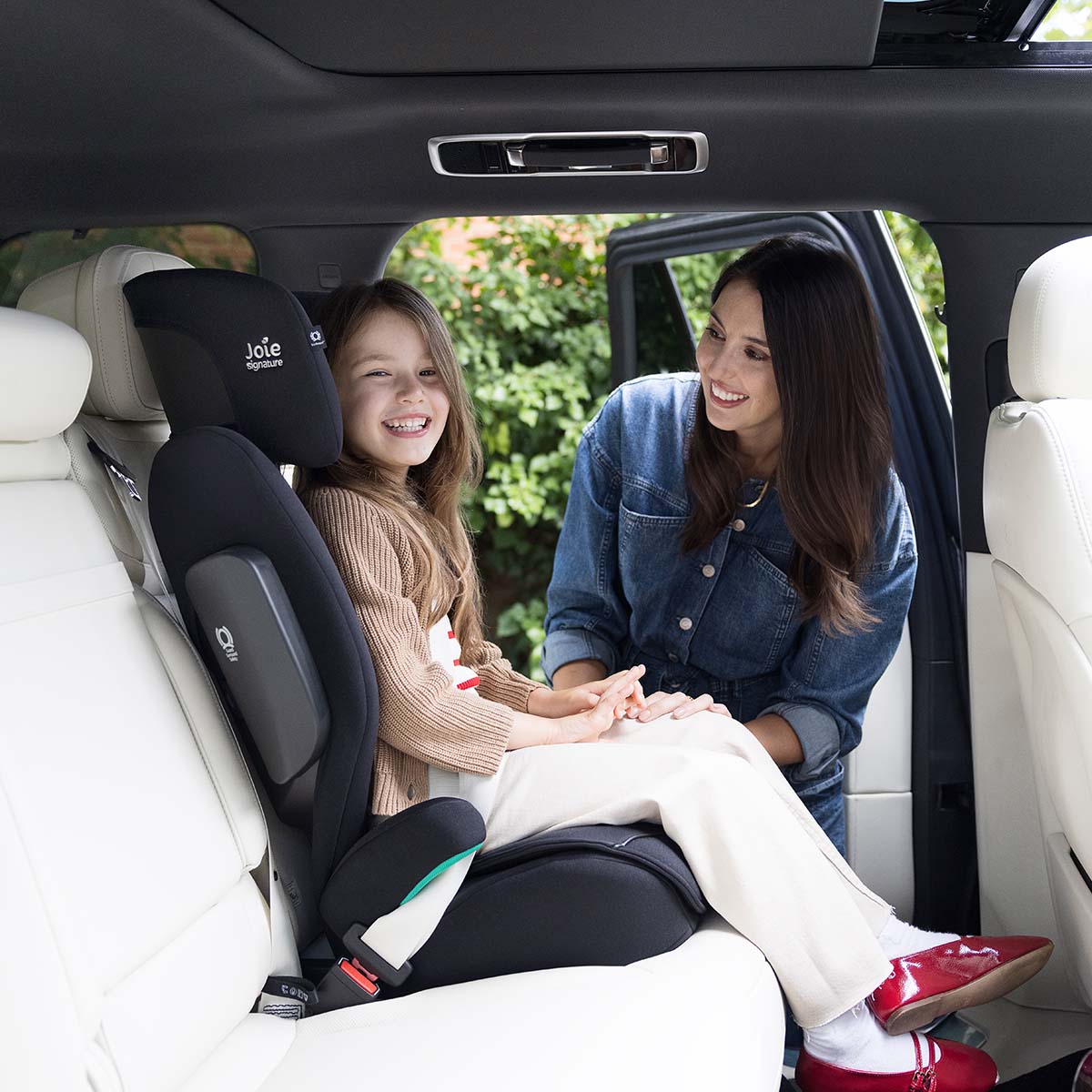
When choosing a car seat, we all want one thing: for our child to be truly safe in the car. Among all the decisions we make, the direction the seat faces is one of the most important — and at the same time one of the most overlooked. More and more research and safety tests clearly show that rear-facing travel is significantly safer for small children than forward-facing travel. In this article we explain why that is, how long a child should stay rear-facing, and how to make it as comfortable as possible for them.
Why Rear-Facing Travel Is Safer
The answer lies in the anatomy of a child's body. Babies and toddlers have a disproportionately large and heavy head relative to the rest of their body — in a one-year-old, the head accounts for roughly a quarter of total body weight. At the same time, their neck muscles and bones are still immature and weak.
In a frontal collision, the most common and most severe type of car accident, a forward-facing child's body is held in place by the harness while the head is thrown forward with great force. This puts enormous stress on the small, sensitive neck, which can cause severe spinal cord injuries.
With rear-facing travel, the story is completely different. The force of the impact is distributed evenly across the entire back surface of the car seat — that is, across the child's back, shoulders and head. The neck stays protected, and the head moves together with the body rather than against it. This is exactly why the Scandinavian research that established this approach shows a significantly lower risk of serious injury in children who travel rear-facing.
What the Standards Say
The newer European i-Size standard (R129) therefore mandates rear-facing travel until at least 15 months of age. This is the legal minimum — not a recommendation. Child safety experts unanimously advise keeping a child rear-facing considerably longer, ideally until at least age 4 or even longer, for as long as the car seat's dimensions allow.
Until What Age Should a Child Stay Rear-Facing?
The question of how long to use a rear-facing car seat is one of the most common among parents. The answer isn't tied solely to age, but to a combination of factors:
- The child's weight and height: every car seat has a stated upper limit for rear-facing travel (e.g., up to a certain height or weight).
- Head position: the child should stay rear-facing until the top of their head reaches above the top edge of the seat's backrest.
- The car seat's capabilities: so-called reboarders are specially designed for extended rear-facing travel.
A simple rule of thumb: rear-facing for as long as possible. Switching to forward-facing isn't a developmental milestone that needs to be reached as soon as possible — on the contrary, every additional month spent rear-facing means greater safety.
Reboarder Car Seats: What to Look For
If you want to keep your child rear-facing until age 4 or beyond, you need a reboarder car seat — a seat designed for extended rear-facing travel. When choosing, pay attention to the following:
- A rotating mechanism. Seats that rotate 360° make daily buckling and unbuckling much easier. You don't have to bend your back and reach deep into the car — you place the child in the seat while it faces the door, then rotate it into the direction of travel. This feature is characteristic of seats like the Cybex Sirona.
- The base system. Quality bases, such as the Cybex Base 360 i-Size, allow for a firm and repeatable installation via the ISOFIX system and a support leg, reducing the chance of installation error.
- Adjustable recline and headrest. For extended rear-facing travel, it's important to be able to adjust the recline for sleeping and being awake, and for the headrest to grow along with the child.
- Legroom. The worry that a child "has nowhere to put their legs" is common, but unfounded — children easily bend or cross their legs and sit completely relaxed in that position.
Among trusted brands offering quality solutions for extended rear-facing travel, besides Cybex, are also Nuna and Maxi Cosi. Each of them has models with high safety ratings and thoughtful ergonomics, so it's worth comparing the dimensions they allow for rear-facing travel.
Common Parent Concerns
Does the Child's Legs Get Cramped and Uncomfortable?
No. Toddlers are extremely flexible, and in a bent or crossed leg position they usually sit more comfortably than adults do. Leg injuries in rear-facing travel are extremely rare — unfortunately, neck and head injuries in forward-facing travel are not.
Does the Child See Less in This Direction?
The child can still see through the side and rear windows and their surroundings. Many parents use an additional mirror in the first year, which lets them stay in visual contact with their child while driving. Safety here always outweighs a forward view.
Practical Everyday Tips
- Before every longer trip, check that the seat is properly secured and the support leg is firmly resting.
- Don't dress your child in bulky winter clothing under the harness — instead, cover them with a blanket after buckling them in.
- Adjust the harness so that you can just barely fit two fingers between the body and the strap.
- As your child grows, regularly adjust the headrest and check the head position relative to the edge of the seat.
Rear-facing travel is one of the most effective things you can do for your child's safety in the car. Investing in a quality reboarder that lets your child stay in this direction until age 4 pays off in every moment on the road — including the one none of us ever want to experience.
Frequently Asked Questions
Until What Age Must a Child Be Rear-Facing by Law?
The i-Size standard (R129) mandates rear-facing travel until at least 15 months of age. This is the legal minimum — experts recommend rear-facing travel until at least age 4, or up to the upper limit allowed by the car seat.
How Do I Know My Child Is Too Big for Rear-Facing Travel?
Check the manufacturer's instructions for the upper weight and height limit. A practical rule of thumb is that the child has outgrown the seat once the top of their head reaches above the top edge of the backrest. Until then, rear-facing travel is entirely appropriate.
Do I Need a Special Reboarder, or Is a Regular Seat Enough?
For extended rear-facing travel until age 4, you need a reboarder — a seat designed specifically for this purpose. Models like the Cybex Sirona with the Cybex Base 360 i-Size base, as well as seats from Nuna and Maxi Cosi, offer extended dimensions for rear-facing travel and often a rotating mechanism as well.
Is It Uncomfortable for a Child to Have No Legroom?
No. Children easily bend or cross their legs and sit relaxed in that position. Leg injuries in rear-facing travel are very rare, while neck injuries in forward-facing travel are a serious danger.



