

In short: Wash bottles, teats and other feeding equipment thoroughly after every feed and, as the NHS advises, sterilise them until at least 12 months, especially for newborns and premature babies. You can sterilise by boiling, steam or a cold-water solution. Warm milk in warm water or a bottle warmer, never in a microwave, and test it on your wrist.
Author: Eva Birsa, mum and co-founder of Evitas · Updated: 5 October 2026
When do you need to sterilise baby bottles, and until when?
A baby's immune system is still developing, so hygiene of feeding equipment matters most in the first months. The World Health Organization (WHO) and FAO guidelines on safe preparation of powdered infant formula state that cleaning and sterilising feeding and preparation equipment is an important prerequisite, because powdered formula is not sterile.
- Until when: the NHS advises sterilising all feeding equipment (bottles, teats, lids) until your baby is at least 12 months old.
- When it matters most: the US CDC stresses that sanitising at least once a day is especially important if your baby is under 2 months old, was born prematurely or has a weakened immune system.
- Before first use: wash and sterilise new bottles, teats and breast pump parts following the manufacturer's instructions.
Advice differs slightly between countries, so ask your GP, health visitor or paediatrician how long to sterilise for your baby.
Daily cleaning: wash first, then sterilise
Sterilising only works on clean equipment. Milk residue in the threads or teat can remain even after steaming.
- Take the bottle apart straight after the feed (bottle, teat, ring, lid, valves).
- Wash all parts in hot, soapy water using a bottle brush and a smaller teat brush.
- Rinse thoroughly under clean running water.
- Wash and dry your hands before handling sterilised equipment.
The CDC advises letting items air-dry rather than using a dish towel, which can transfer germs. A bottle drying rack can help.
Sterilising methods compared
| Method | How it works | Advantages | Watch out for |
|---|---|---|---|
| Boiling | Items fully submerged; the NHS advises boiling for at least 10 minutes (the CDC says 5 minutes). | No special device needed. | Don't leave the pan unattended; take care with hot water and steam. |
| Electric steam steriliser | Steam in a closed unit, following the manufacturer's instructions; some models also dry. | Several bottles and parts at once, little effort. | Follow the manufacturer's instructions on cleaning the unit and which parts can go in. |
| Microwave steam steriliser | A container with a little water heated in the microwave. | Quick and compact. | Follow the manufacturer's instructions on wattage and time; the container is hot after the cycle. |
| Cold-water solution (tablets or liquid) | Items submerged for at least 30 minutes; the NHS advises changing the solution every 24 hours. | No electricity needed, handy when travelling. | Make sure no air bubbles are trapped and everything is fully submerged. |
| Dishwasher | A cycle with hot water and heated drying. | Convenient for everyday cleaning. | NHS: a dishwasher cleans but does not sterilise. CDC: a hot-water cycle with heated drying can replace a separate sanitising step. |
For everyday dishwasher cleaning there are also Canpol babies eco dishwasher tablets, which the manufacturer describes as eco-certified and designed for washing baby dishes, bottles and feeding accessories.
Electric steam steriliser: what to look for
Check the capacity (how many bottles and small parts fit), whether it has a drying function and auto shut-off, and how easy it is to clean. According to the manufacturer, the LOVI electric steam steriliser and bottle dryer sterilises in 10 minutes, lets you set drying to 10, 30 or 50 minutes, holds up to 4 bottles and 10 smaller items (e.g. teats or breast pump parts) per cycle, uses 100 ml of water per cycle and switches off automatically when the programme ends. See more models in our sterilisers and bottle warmers category.
After sterilising
The NHS suggests leaving bottles and teats in the steriliser or pan until you need them. When you take them out, put the teats and lids on straight away. If you store them, make sure they are completely dry and kept in a clean, closed cupboard.
Bottle warmers: how to warm milk safely
Warming isn't essential: according to the CDC, breast milk can be given at room temperature or cold, and prepared formula doesn't need heating either. If your baby prefers warm milk, follow a few rules:
- Never use a microwave. The NHS and CDC warn that microwaves heat unevenly and create hot spots that can burn your baby's mouth.
- Test the temperature on your wrist. Put a few drops on the inside of your wrist: the milk should feel warm, not hot.
- Breast milk: warm it in a sealed container in a bowl of warm water or in a bottle warmer. Use any leftovers within 2 hours (CDC). More in our guide to storing breast milk.
- Formula: make each feed fresh with water that is still at least 70°C, then cool it under cold running water (NHS). Throw away leftovers after the feed. See the step-by-step formula feeding guide.
Water-bath or waterless bottle warmer?
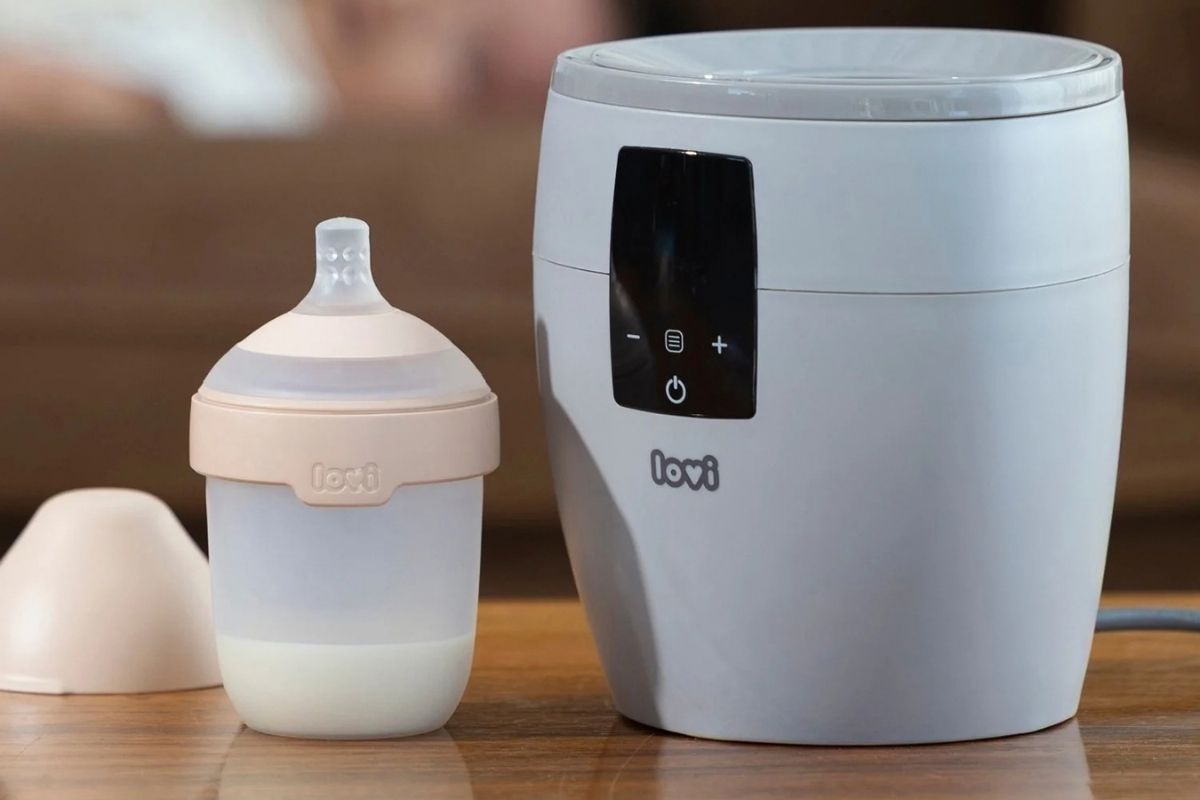
Traditional warmers heat the bottle in a water bath, so they need regular cleaning and fresh water. Waterless warmers use hot air. According to the manufacturer, LOVI AirWarm works without water, gently moves the liquid while warming for more even heat distribution, has a digital display and a programme for liquids at room temperature or straight from the fridge. Whatever warmer you use, always test the milk on your wrist and don't keep it warm for long.
If you're looking for a machine that makes up formula feeds, we cover the Tommee Tippee Perfect Prep Pro in a separate article; bottles and teats still need washing and sterilising when you use it.
What about BPA in baby bottles?
Since 20 January 2025, Commission Regulation (EU) 2024/3190 has applied in the EU, restricting the use of bisphenol A (BPA) and certain other bisphenols in materials and articles intended to come into contact with food, with transition periods for some products. Check the manufacturer's labelling when buying bottles and containers.
Frequently asked questions
Until what age should I sterilise baby bottles?
The NHS advises sterilising all feeding equipment until your baby is at least 12 months old. The CDC stresses that regular sanitising matters most for babies under 2 months, premature babies and those with a weakened immune system.
How often should I sterilise bottles?
Wash equipment after every feed. For the most vulnerable babies the CDC advises sanitising at least once a day; for formula feeding the NHS advises using sterilised bottles and teats. Follow your health professional's advice too.
Does a dishwasher sterilise bottles?
According to the NHS, a dishwasher cleans feeding equipment but does not sterilise it. The CDC says a hot-water cycle with heated drying (or a sanitising setting) can replace a separate sanitising step.
Do I need to sterilise dummies and breast pump parts too?
Yes, parts that come into contact with milk or your baby's mouth need the same careful cleaning. For breast pump parts, follow the manufacturer's instructions on which parts can be steamed or boiled.
Can I warm milk in the microwave?
No. Microwaves heat unevenly and can create hot spots that burn the mouth. Use a warm water bath or a bottle warmer and test the temperature on your wrist.
How long can warmed milk stand?
According to the CDC, use prepared formula within 2 hours of preparation or within 1 hour of starting the feed, and throw away leftovers. Use leftover breast milk within 2 hours.
Sources
- NHS – Sterilising baby bottles
- NHS – How to make up baby formula
- WHO/FAO – Safe preparation, storage and handling of powdered infant formula: guidelines
- CDC – How to Clean, Sanitize, and Store Infant Feeding Items
- CDC – Infant Formula Preparation and Storage
- CDC – Proper Storage and Preparation of Breast Milk
- EUR-Lex – Commission Regulation (EU) 2024/3190
This content is for information only and does not replace advice from your paediatrician or health professional.



