

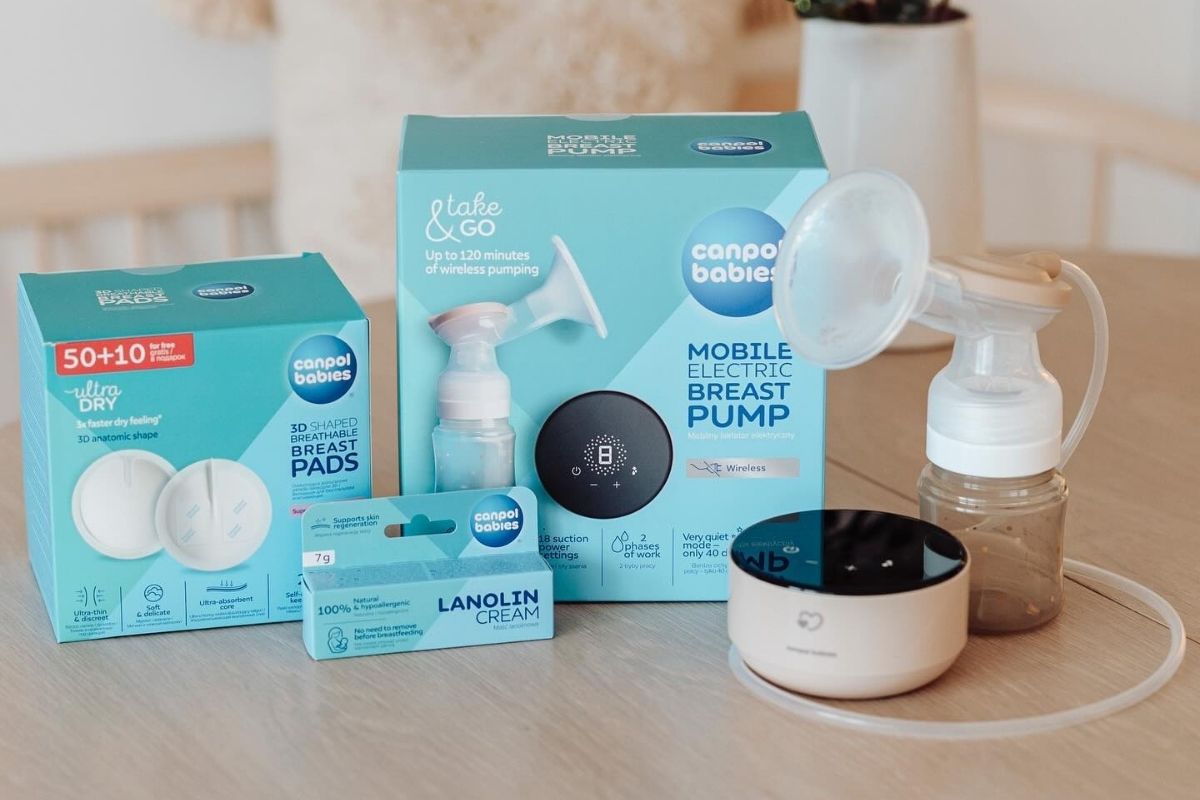
In short: For occasional pumping (say, a bottle for an evening out) a manual or small electric pump is enough. If you pump every day, for example after returning to work, choose an electric or wearable in-bra pump. For exclusive pumping, a double pump that empties both breasts at once is the most practical. The right flange size matters just as much.
Author: Eva Birsa, mum and co-founder of Evitas · Updated: 27 September 2026
When do you need a breast pump?
Many breastfeeding mums never need a pump, or only need one now and then. According to the NHS, expressing milk is mainly useful when:
- you are away from your baby for a while (going back to work, a night out, baby in special care),
- your breasts feel overfull or engorged,
- your baby has trouble latching or sucking,
- you would like your partner to give your milk in a bottle,
- you want to boost your milk supply or mix breast milk into your baby's first solids.
You can also express by hand – it costs nothing and is especially helpful in the first days after birth. If you are not sure whether you need a pump, ask your midwife, health visitor or a lactation consultant (IBCLC).
Types of breast pumps
Manual pump
Works without power or batteries: squeezing the handle creates suction. It is the most affordable option, light, quiet and easy to travel with. The NHS notes that manual pumps are slower than electric ones, so they suit occasional pumping best.
Electric pump
A motor creates suction in a rhythm that mimics your baby: a fast stimulation phase first, then slower, deeper expression. You set the strength and mode yourself. Electric pumps are faster and easier on your hands, which makes them a good fit for regular pumping.
Wearable in-bra pump
The collection cup and motor sit in one unit (or the motor sits in a small pocket unit) that you slip into your bra. No tubes to a wall socket, so your hands are free while you pump. Cups usually hold less than the bottles of traditional pumps, and fit varies from mum to mum – a good seal is essential.
Single or double?
A single pump expresses one breast at a time, a double pump both at once. According to Great Ormond Street Hospital (NHS), double pumping saves time and usually yields more milk, so it is recommended for mums who pump often or exclusively.
Canpol babies breast pumps compared
All Canpol babies pumps are in our breast pump collection. Specs come from the product descriptions and the manufacturer's official website; the "best for" column is our general recommendation.
| Model | Type | Single / double | Suction | Modes × levels | Cup | Flanges included | Best for | Portability |
|---|---|---|---|---|---|---|---|---|
| Basic Light | manual | single | by hand | – | bottle (with adapter for Canpol babies bottles) | soft silicone massage insert | occasional pumping | no power needed, light, quiet |
| PowerPump | electric, portable | single | up to 42 kPa | 4 × 15 | 180 ml | 22 mm (other flanges and inserts sold separately) | occasional to regular | USB-C rechargeable, compact |
| SmartSense single | wearable, in-bra | single | up to 36 kPa | 4 × 12 | 180 ml | 24 mm + 17, 19, 21 mm inserts | regular, hands-free pumping | 220 g, battery up to 120 min |
| SmartSense double | wearable, in-bra | double (2 units) | up to 36 kPa | 4 × 12 | 2 × 180 ml | 2 × 24 mm + 6 inserts (17, 19, 21 mm) | regular to exclusive pumping | 2 × 220 g, battery up to 120 min |
| MilkShell | electric, in-bra (pocket motor with tubes) | double | up to 30 kPa | 4 × 12 | 2 × 180 ml | 2 × 27 mm + 6 inserts (19, 21, 24 mm) | exclusive pumping, back to work | motor on a neck strap or clipped to your waistband |
Higher suction (kPa) does not automatically mean better pumping – comfort and a correct flange fit matter more. With any electric pump, start at the lowest level and increase gradually to what still feels comfortable.
How to choose a breast pump: 5 questions
- How often will you pump? A few times a week → manual or a portable electric pump. Daily → electric or wearable. Several times a day or exclusively → double.
- Where will you pump? On the sofa at home it hardly matters; at work, in the car or while looking after an older child, hands-free in-bra pumps are a big plus.
- One breast or both? If the other breast leaks while you feed, you can catch that milk with a breast milk collector – no pumping needed.
- Which flange size? Check which sizes are included and whether inserts are available (see below).
- Cleaning and noise: fewer parts means quicker washing. According to the manufacturer, all electric Canpol babies pumps in this comparison run at up to 50 dB.
How to choose the right flange size
The flange (breast shield) is the part that sits on your breast. A flange that is too small or too big can cause pain and reduce milk output. Following Cleveland Clinic's advice:
- Measure the diameter of your nipple at the base in millimetres (not the areola), ideally right after feeding or pumping. Measure both sides – they can differ.
- As a starting point, most people do well with a flange 2–4 mm larger than their nipple diameter.
- Good fit: the nipple moves freely in the flange tunnel without rubbing the sides, and little or no areola is pulled in.
- Too small: pain, nipple rubbing against the tunnel, cracks, a pale or purple ring.
- Too big: a lot of areola pulled into the tunnel, tugging, swelling after pumping, less milk.
| Model | Sizes included |
|---|---|
| SmartSense (single and double) | 24 mm + 17, 19 and 21 mm inserts |
| MilkShell | 27 mm + 19, 21 and 24 mm inserts |
| PowerPump | 22 mm (other flanges and inserts sold separately) |
Your size can change over the months of breastfeeding, so re-check it from time to time.
How often and when to pump
- Occasional pumping: pump after a feed, or on the other breast during a feed, when milk flows most easily. It often takes a few sessions to collect one bottle.
- Exclusive pumping or building supply (e.g. a premature baby): Great Ormond Street Hospital (NHS) advises at least 8–10 sessions in 24 hours, including at least one at night; The Breastfeeding Network recommends stimulating your breasts at least 8 times a day, including once overnight.
- Going back to work: start pumping a few weeks beforehand so you can get used to your pump and build a small freezer stash.
- Pumping should not hurt. Start on stimulation at a low level; if it hurts, turn the suction down and check your flange size.
If you have supply concerns or pain, get help from a lactation consultant, midwife or health visitor.
Cleaning your breast pump
The CDC advises after every session:
- Cap and label the milk and put it in the fridge straight away.
- Take the pump apart and check all parts that touched milk.
- Rinse the parts under running water, then wash them as soon as possible in hot soapy water (or in the dishwasher if the manufacturer allows it).
- Let them air-dry on a clean surface.
Sanitise the parts at least once a day as well (steam, boiling for 5 minutes or a dishwasher sanitise setting) – especially if your baby is under 2 months old, was born prematurely or has a weakened immune system. Never submerge the motor unit in water. Replace silicone membranes and valves regularly; for the Basic Light manual pump, the manufacturer recommends replacing the membrane and valve every 3–4 weeks if you pump several times a day.
Storing expressed milk at a glance
| Where | NHS | CDC |
|---|---|---|
| Room temperature (up to 25 °C) | – | up to 4 hours |
| Fridge (4 °C or colder) | up to 8 days | up to 4 days |
| Ice compartment of a fridge | 2 weeks | – |
| Freezer (−18 °C or colder) | up to 6 months | best within 6 months, up to 12 acceptable |
- Defrost slowly in the fridge and use within 24 hours; never refreeze thawed milk.
- Do not warm milk in a microwave (hot spots). Use warmed milk within 2 hours and throw away any leftovers in the bottle after 2 hours (CDC).
- For freezing, pre-sterilised 150 ml breast milk storage bags with a measuring scale and date labels are handy (single use).
For bottle-feeding expressed milk, read our guide to the LOVI Mammafeel bottle.
Useful extras
- Breast milk collector (2 pcs) – catches milk leaking from the other breast while you feed (up to 50 ml per shell).
- Breast milk storage bags – for the fridge and freezer.
- Nursing pads and lanolin cream – in our breastfeeding collection. To pick the right pads, read Reusable or disposable nursing pads?
See the full range in the Canpol babies collection.
Frequently asked questions
Which breast pump is best for beginners?
If you do not know how often you will pump, start with a manual or small portable electric pump. For daily pumping, an electric or wearable in-bra pump is more practical; for exclusive pumping, choose a double pump.
Should I buy a single or double breast pump?
A double pump saves time and, according to Great Ormond Street Hospital (NHS), usually yields more milk. It makes sense if you pump several times every day. For occasional pumping a single pump is enough.
Does pumping hurt?
It should not. Pain is most often a sign of too much suction or the wrong flange size. Turn the suction down, check the fit and talk to a lactation consultant if needed.
How often should I pump if my baby does not feed at the breast?
To establish and maintain your supply, Great Ormond Street Hospital (NHS) advises at least 8–10 sessions in 24 hours, including at least one at night.
How long can expressed milk stay in the fridge?
Up to 8 days at 4 °C or colder according to the NHS, or up to 4 days according to the more cautious CDC. In the freezer (−18 °C), up to 6 months.
Can I move around while wearing an in-bra pump?
Yes, that is what it is designed for. For SmartSense and MilkShell the manufacturer highlights a tight seal and anti-leak design, but avoid bending over a lot while the cup is full.
Sources
- NHS – Expressing and storing breast milk
- Great Ormond Street Hospital (NHS) – Breastfeeding and expressing milk for your baby
- The Breastfeeding Network (UK) – Expressing and storing breastmilk
- CDC – Proper storage and preparation of breast milk
- CDC – How to keep your breast pump kit clean
- Cleveland Clinic – Finding your breast pump flange size
- Canpol babies – Breast pumps (official product information)
This content is for information only and does not replace advice from your paediatrician, midwife or lactation consultant.
Read next: Hospital bag checklist · Newborn essentials checklist



